Many people ask whether they can use a Pag-IBIG loan for solar panels. Pag-IBIG Fund’s housing loans include home improvement as a purpose. Eligibility, loan amounts, interest rates and requirements depend on the program and on your membership record, and they change. Get the current details directly from Pag-IBIG Fund, at a branch or on its official website, before you plan around them.
For 2026 loan amounts, the 3% promo rate, requirements and a sample computation, see our Pag-IBIG solar loan guide.
Options at a glance
- Cash. Simplest, with no interest. Best value if paying for the system doesn’t drain your emergency fund.
- Pag-IBIG. For members. Check whether your project qualifies and how long processing takes.
- Bank loans. Personal or home-improvement loans. Compare the effective interest rate, fees and term.
- Installer or supplier installment plans. Convenient, but ask for the total amount payable, not only the monthly figure.
- Credit-card installments. Check whether the rate really is 0% and what happens if you miss a payment.
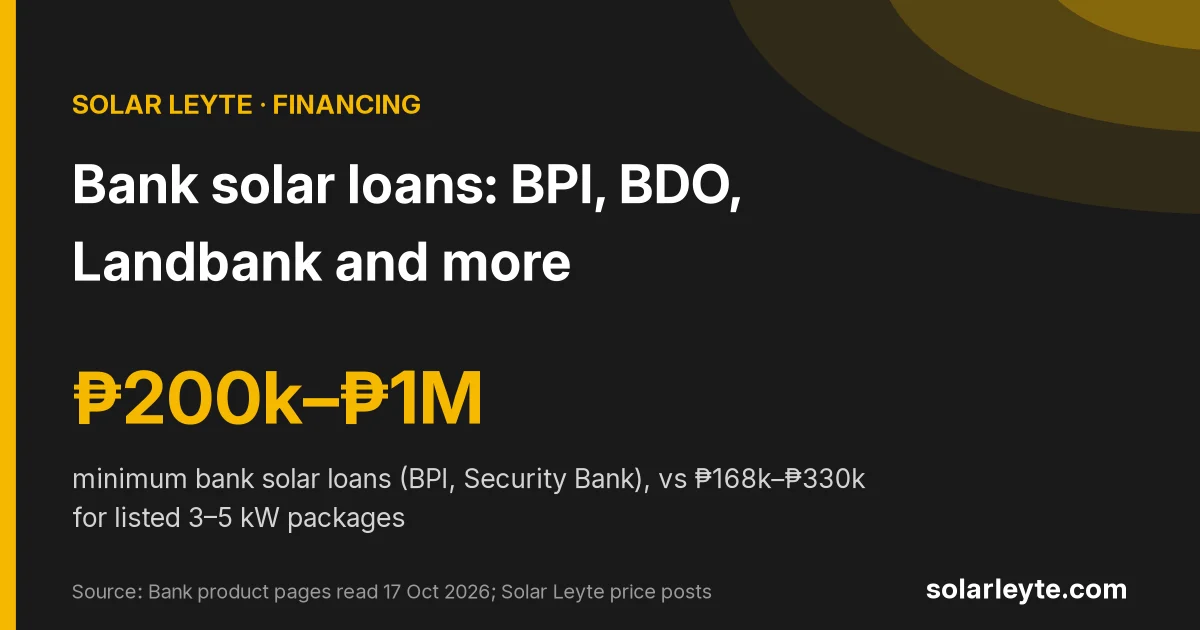
Weighing a bank loan instead? Our bank solar loan guide compares BPI, BDO, Security Bank, RCBC and Landbank minimums, rates and fees with Pag-IBIG.
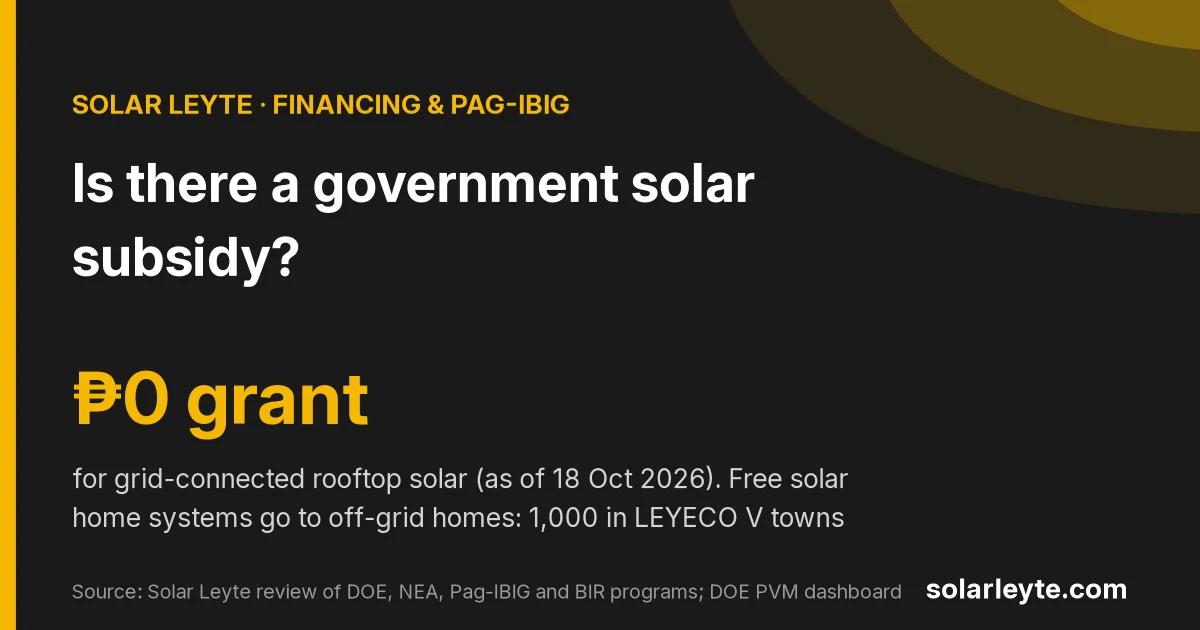
Hoping for a government grant instead? Our solar subsidy guide explains why grid-connected homes don't get one yet, and which off-grid households can get a co-op solar home system.
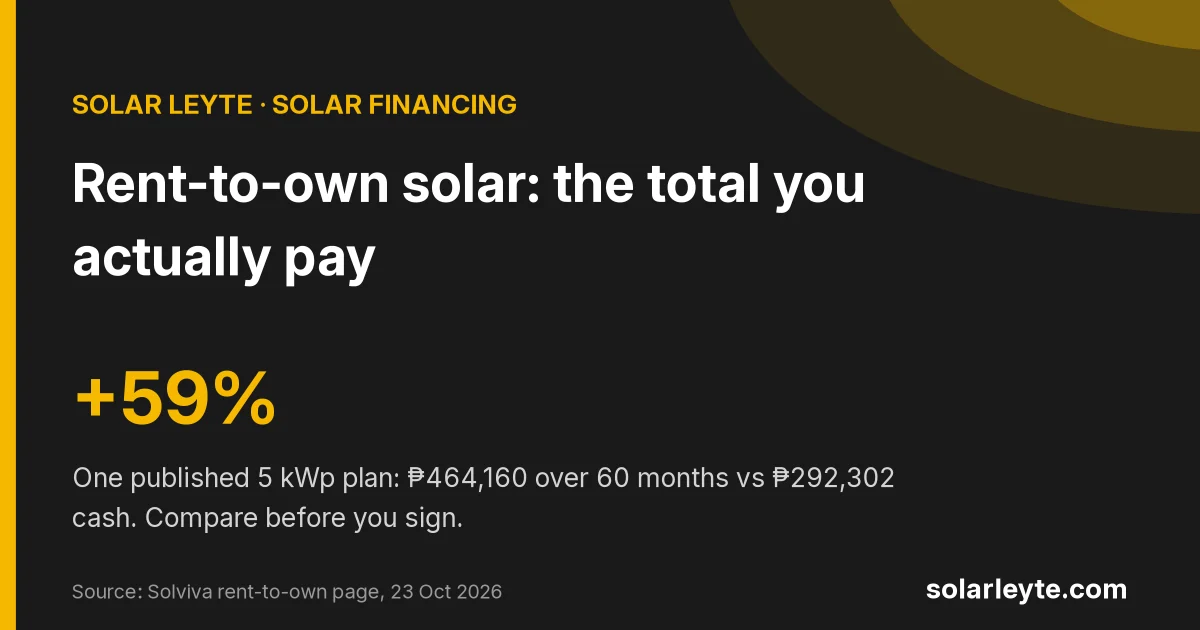
Looking at rent-to-own or a 0% installment plan instead? Our guide to rent-to-own solar compares the total you pay against cash, Pag-IBIG and bank loans.
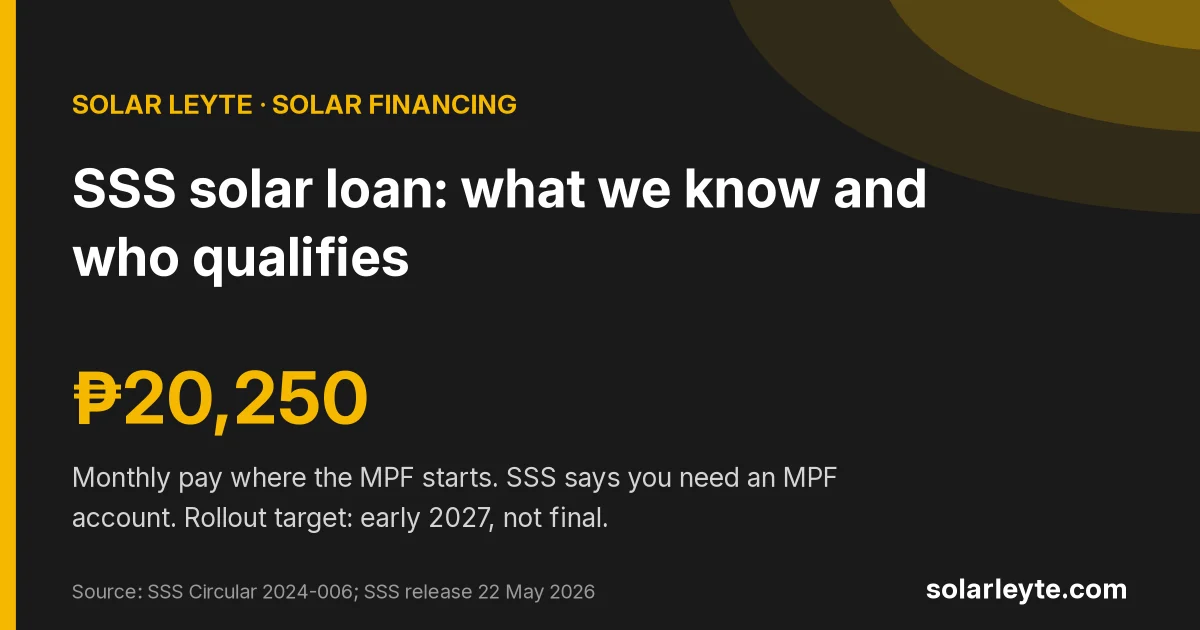
Waiting for the SSS solar loan? Our SSS solar loan guide tracks what SSS has announced, who the MPF rule covers and what to use until it opens.
Work for the government or get a GSIS pension? Our GSIS solar loan guide explains who qualifies, what to upload in GSIS Touch and how the ₱10,416.67 monthly payment on a ₱500,000 loan is computed.
How to compare financing with savings
- Get the total cost of the system, including installation.
- Get the total you will pay over the life of the loan, including interest and fees.
- Estimate your monthly savings from real numbers: the system’s expected monthly production multiplied by your effective electricity rate (see our rates guide).
- Compare the monthly loan payment with the expected monthly savings. If the payment is higher, solar can still make sense, but you are covering part of it from your own pocket until the loan is paid off.
Documents to prepare
Lenders typically ask for valid IDs, proof of income and a formal quotation from the installer. For Pag-IBIG, check the current checklist for the loan type you are applying for.
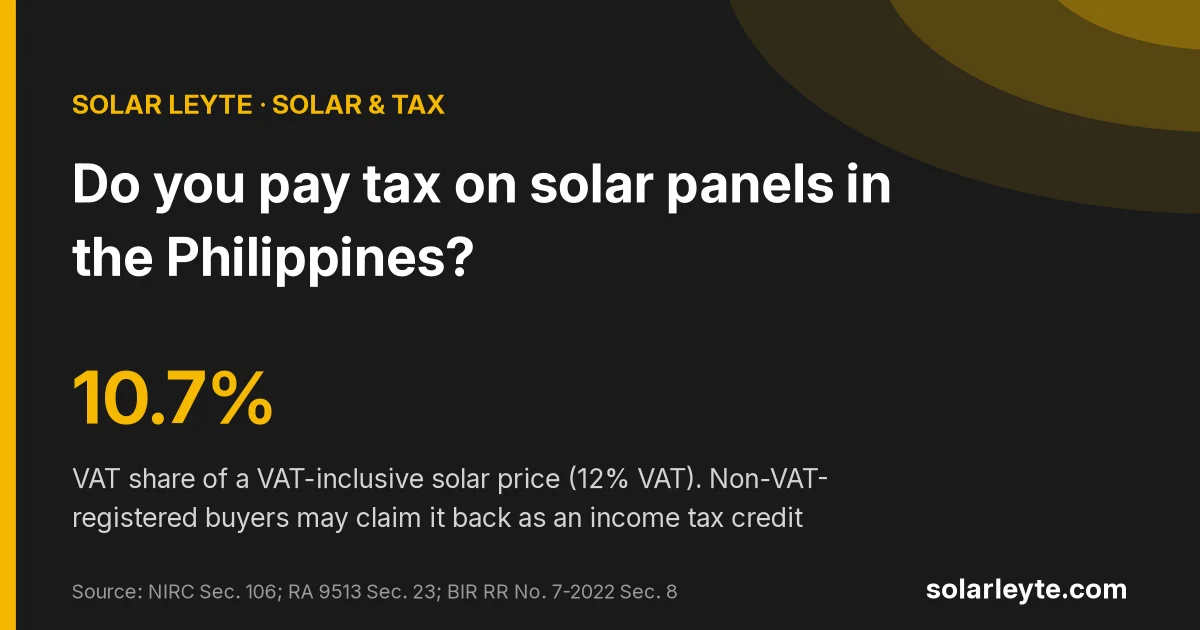
Budgeting for VAT or wondering what your assessor may charge once the panels are up? Our solar panel tax guide explains the 12% VAT, the VAT rebate for buyers who aren't VAT-registered, and real property tax on solar.
A quotation for your loan application
MACC can prepare an itemised quotation for you to submit with a loan application. Request one here.