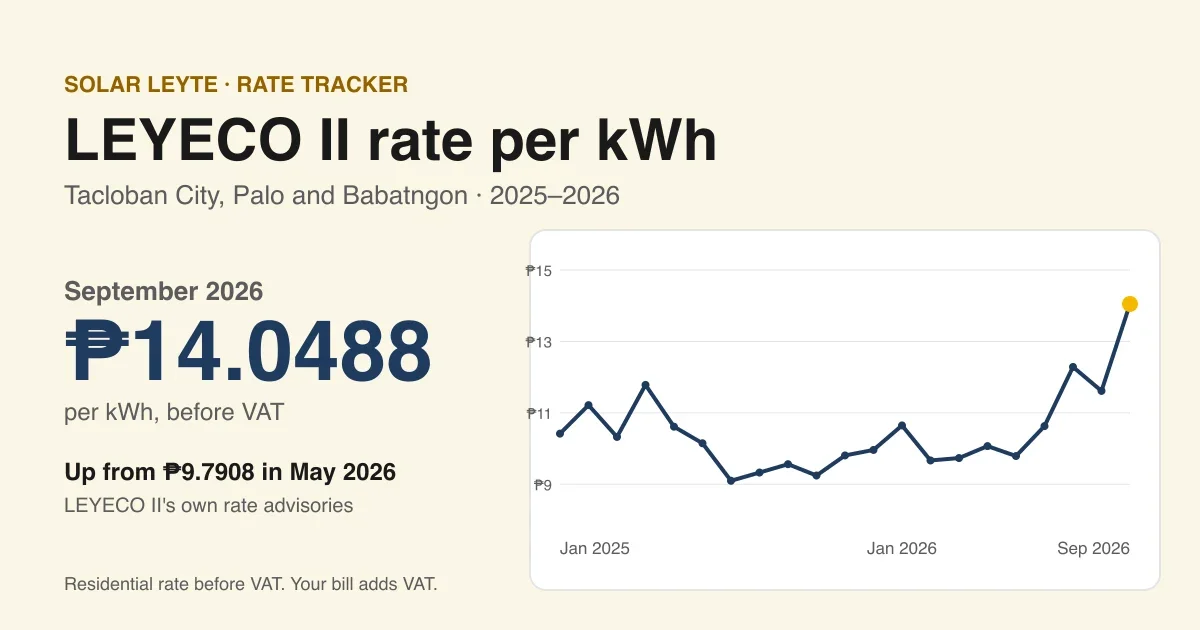
In Biliran, electricity is distributed by the Biliran Electric Cooperative (BILECO). In Leyte, several electric cooperatives serve different areas; LEYECO II, for example, serves Tacloban City and nearby towns. The name of your cooperative is printed on your bill.
Why your rate changes every month
The biggest part of most bills is the generation charge: the cost of the electricity itself, which your cooperative buys from power suppliers and passes on to its members. It moves with fuel costs, supply contracts and market conditions, so the rate per kWh can go up or down from one month to the next. The cooperative’s own distribution charges are regulated by the Energy Regulatory Commission (ERC).
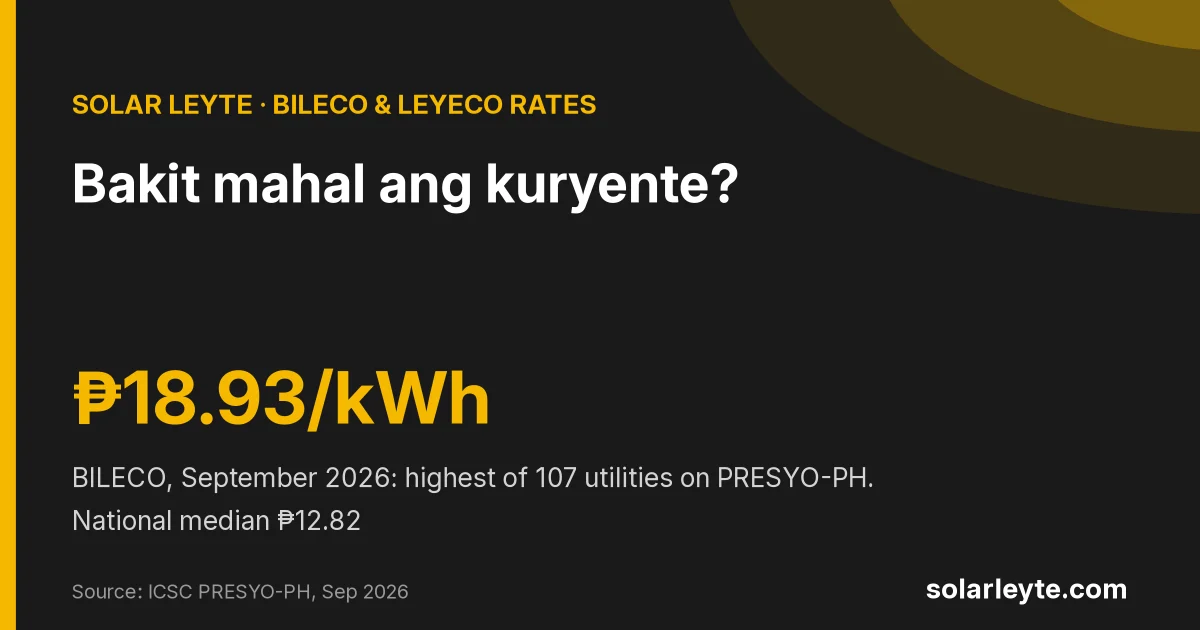
Wondering why Biliran and parts of Leyte pay some of the highest rates in the country? Our bakit mahal ang kuryente explainer covers imported coal, old power contracts, the congested Visayas grid and what you can actually do.
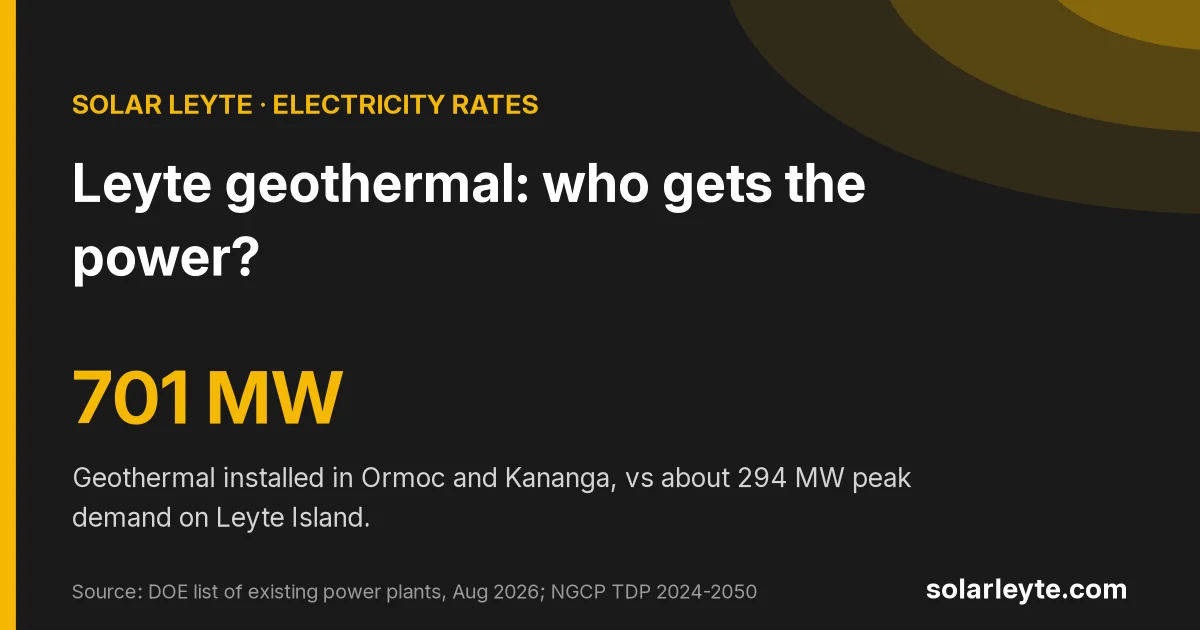
Leyte has big geothermal plants in Ormoc and Kananga, so why isn't power cheaper here? Our Leyte geothermal power plants explainer shows where that power goes and which co-ops actually buy it.
Part of the generation charge comes from the spot market. Our Visayas WESM price tracker shows the 2026 monthly prices and why old spot bills can still show up on your BILECO or LEYECO bill months later.
Big solar farms are going up in San Isidro, San Miguel and Isabel. Our Leyte solar farms explainer lists each project and grid battery, and why they won't cut your generation charge overnight.
Bill suddenly higher than last month? Our bakit tumaas ang bill ng kuryente checklist shows how to tell whether it's the rate, the billing days or your own kWh.
Got a disconnection notice? Our disconnection and reconnection guide explains the 48-hour notice, when a co-op can't cut your power, and the new ERC reconnection fee.
What’s on your bill
Exact labels differ between cooperatives, but charges are usually grouped like this:
- Generation – the cost of the electricity itself
- Transmission – moving power over the national grid
- System loss – the cost of power lost along the lines
- Distribution, supply and metering – the cooperative’s own costs of running the network
- Universal and other government-mandated charges
- Taxes, including VAT
- Subsidies and adjustments, such as lifeline or senior-citizen discounts where they apply
Want every line explained with real numbers? Our electric bill computation guide walks through BILECO's October 2026 rate sheet charge by charge and works out a 150 kWh bill.
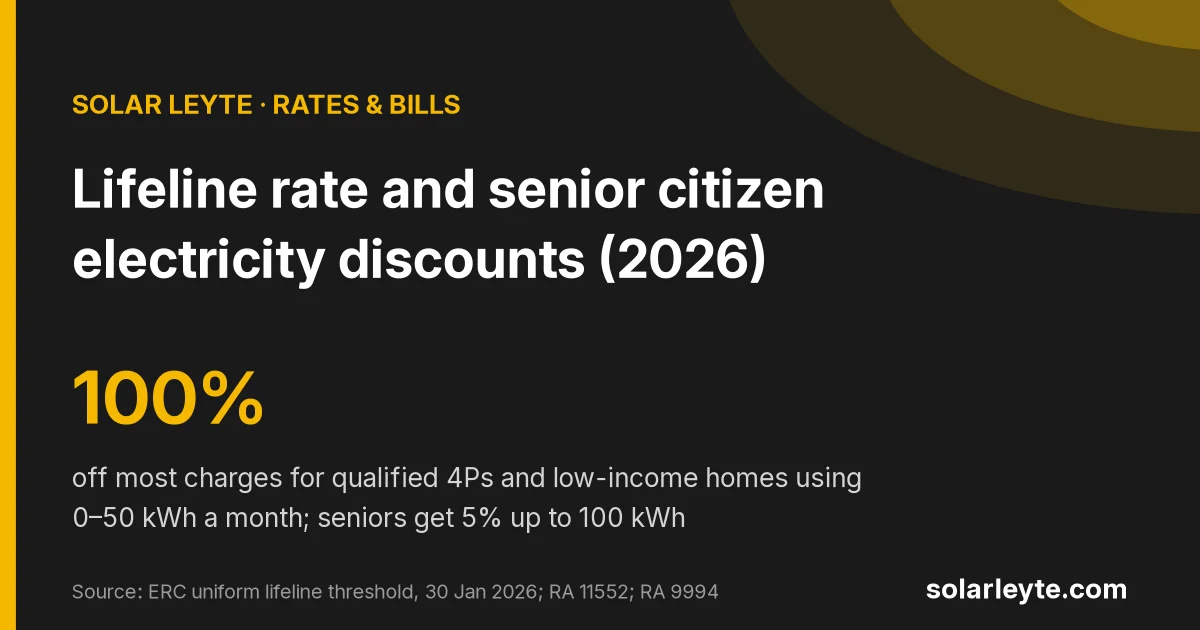
On 4Ps, below the poverty line, or living with a senior whose name is on the meter? Our lifeline rate and senior citizen discount guide explains who qualifies, the kWh limits and what to bring to BILECO or your LEYECO co-op.
Seeing a REC Recovery or FIT-All line on your bill? Our Renewable Portfolio Standards (RPS) explainer shows why BILECO and LEYECO must buy more renewable power and how little that line adds to a typical bill.
How to work out your effective rate
Divide the total amount of your bill by the kWh you used that month. That number, your effective rate per kWh, is the one that matters when you estimate what solar could save you. Work it out for several months; it will vary.
Not sure your kWh is right? Our guide to reading your electric meter shows how to read dial and digital meters, check them yourself and ask for the free meter test under the 2026 Magna Carta.
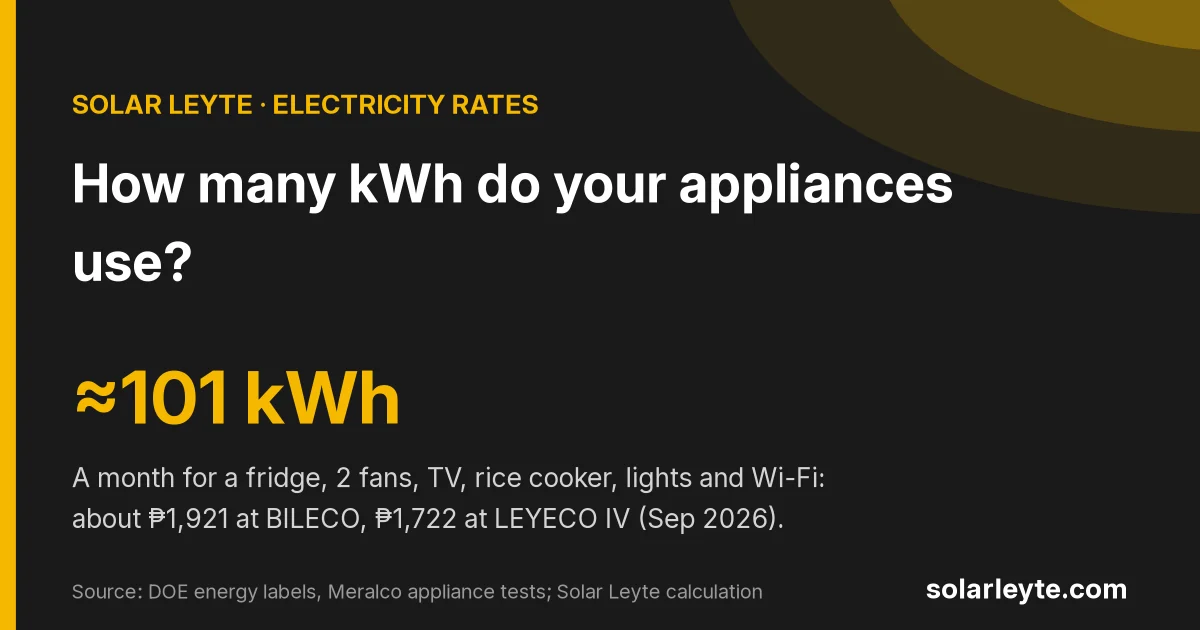
For how many kWh a fridge, fan, TV or rice cooker uses at BILECO and LEYECO rates, see how many kWh appliances use.
Wondering whether your monthly kWh is typical? Our average electric bill guide cites the official 266.88 kWh national survey figure and shows what that would cost at current BILECO and LEYECO IV rates.
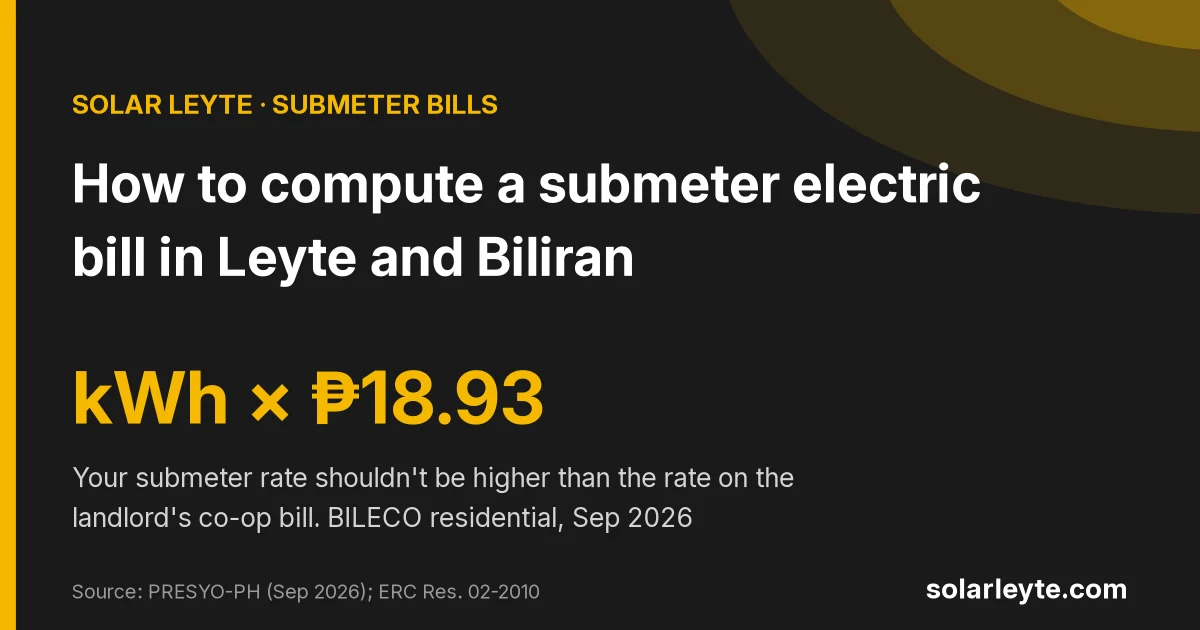
Sharing one meter in a boarding house or apartment? Our guide on how to compute a submeter electric bill shows the formula and what the ERC says landlords can charge.
Buying a submeter or a meter base? Our kWh meter price guide lists November 2026 shop prices and explains why a submeter for tenants needs an ERC seal.
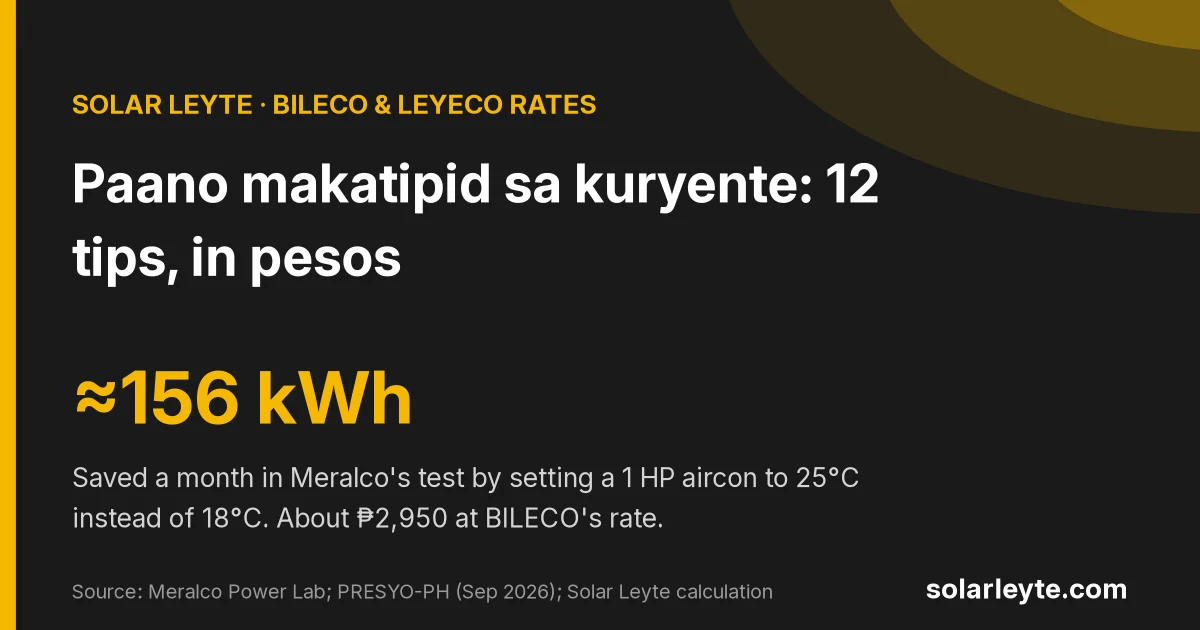
Want to cut your kWh before anything else? Our paano makatipid sa kuryente guide prices 12 tested tipid tips at BILECO and LEYECO rates.
Thinking of swapping your LPG tank for an induction cooker? Our induction cooker vs LPG guide compares the cost per tank at BILECO and LEYECO IV rates and shows the break-even rate per kWh.
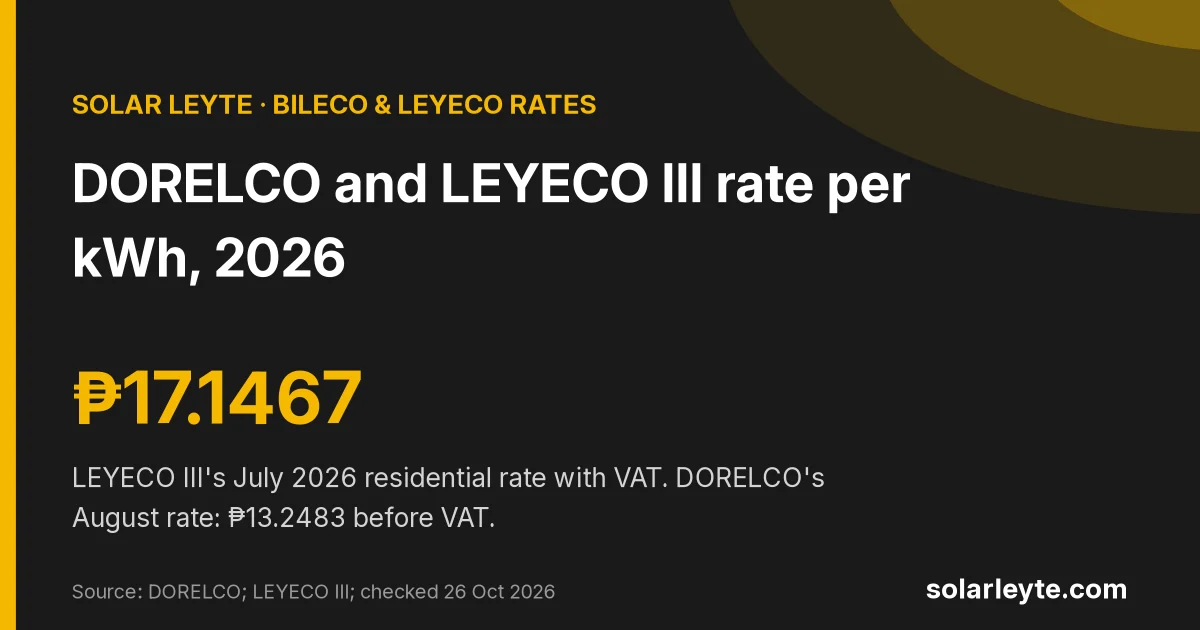
Served by DORELCO or LEYECO III? Our DORELCO and LEYECO III rate tracker shows each co-op's latest posted rate, what's inside it and sample bills.
Where to find official rates
Cooperatives publish their monthly rate schedules, usually at their offices and on their official Facebook pages. Our rate-tracker articles list each month’s published rate, with a link to the source and the date we checked it. If you see a figure on this site that doesn’t match the official schedule, tell us and we will correct it.
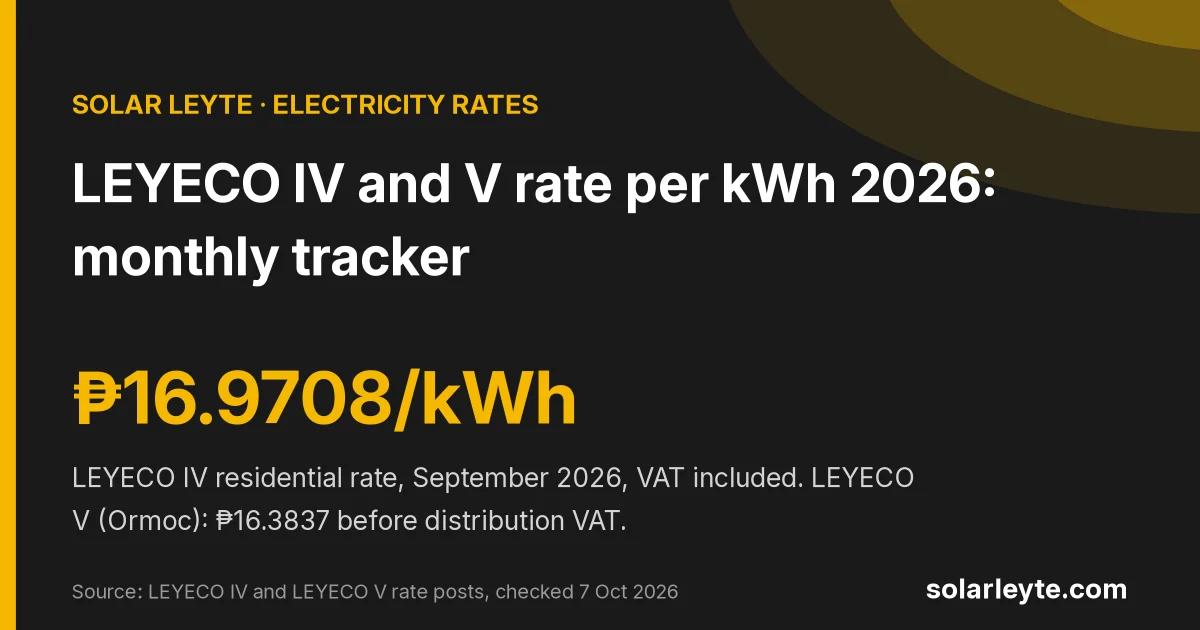
For monthly rates in Baybay, Hilongos and Ormoc, see our LEYECO IV and LEYECO V rate tracker.
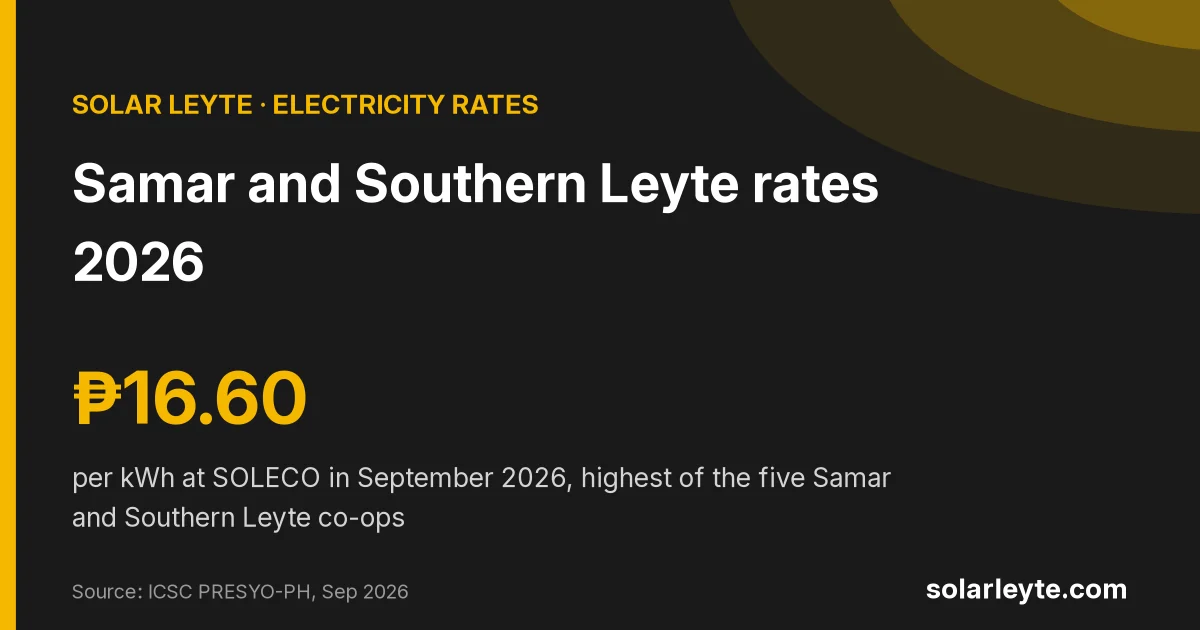
Across the strait in Samar or Southern Leyte? Our SAMELCO, ESAMELCO, NORSAMELCO and SOLECO rate tracker has the latest monthly rates.
Ready to pay? Our guide to paying your BILECO, LEYECO or DORELCO bill online lists the GCash, Maya, bank and payment-centre options each co-op publishes, and how to check your balance first.
Moving into a new house? Our guide to getting a new BILECO or LEYECO connection covers the seminar, the papers, and how the bill deposit and its refund work under the 2026 Magna Carta.
What this means for solar
Every kWh your panels produce and you use yourself is a kWh you don’t buy from the cooperative, so it saves you your effective rate. The higher your rate, the stronger the case for solar, but the calculation only works with real numbers from your own bill. Send us a recent bill and we will run the numbers for your home or business.
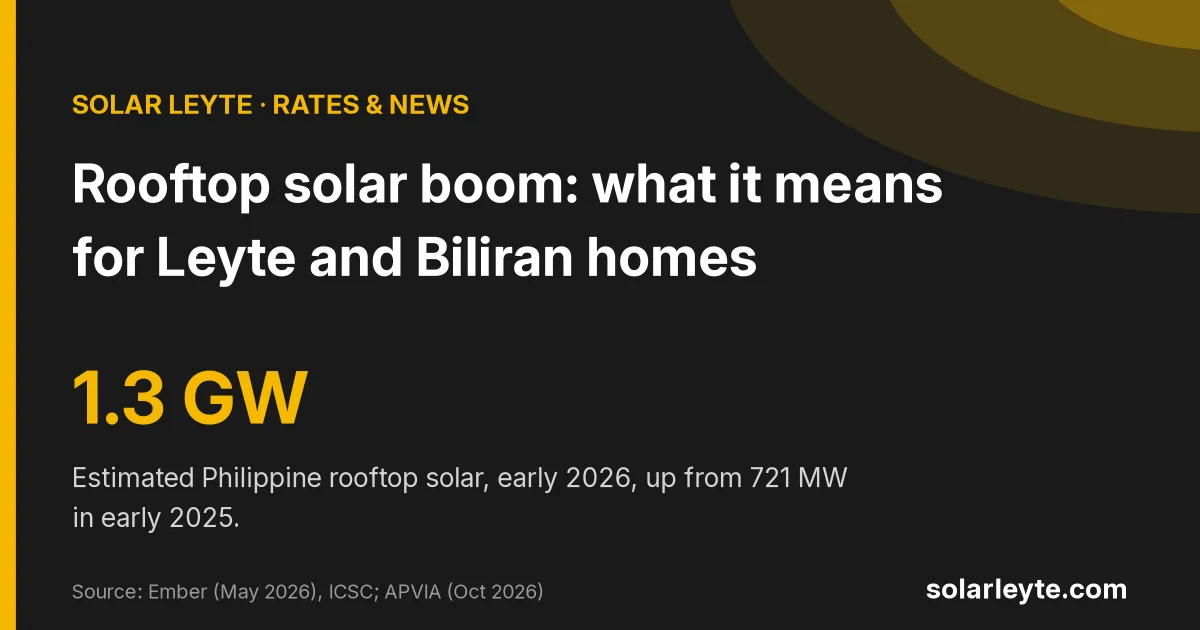
Wondering why so many neighbours are suddenly putting up panels? Our rooftop solar boom explainer covers the 2026 numbers, installer waits and what the payback headlines mean at BILECO and LEYECO rates.
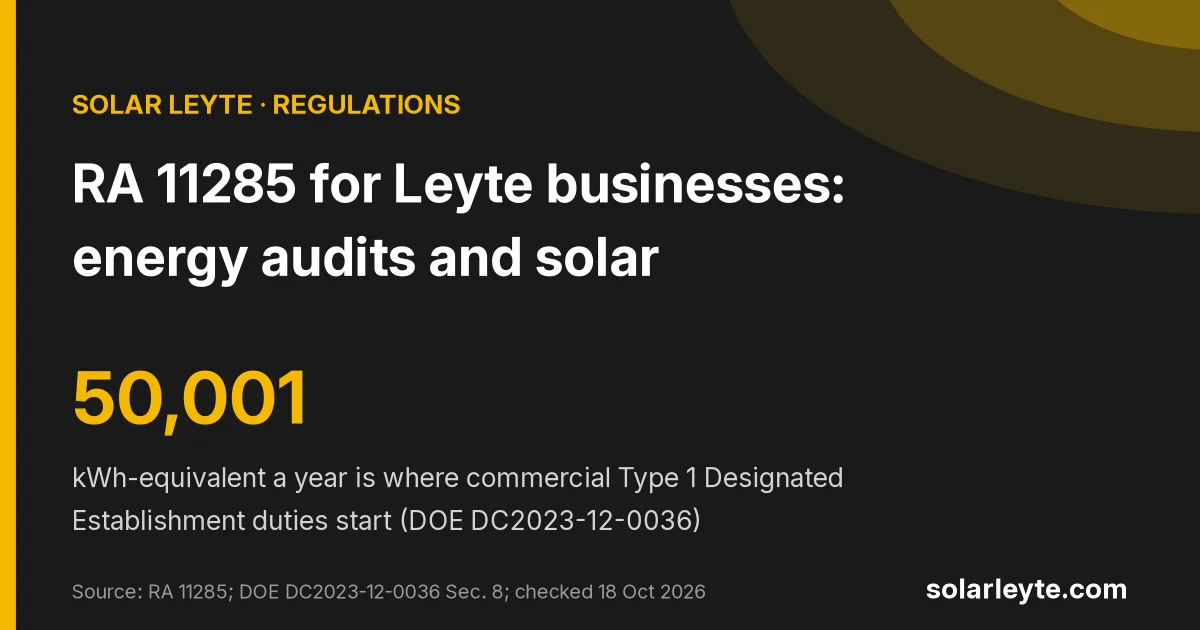
Running a hotel, resort, mall or farm with a big bill? Our RA 11285 Energy Efficiency Act guide explains Designated Establishment thresholds, energy audits and where rooftop solar fits under the DOE rules.