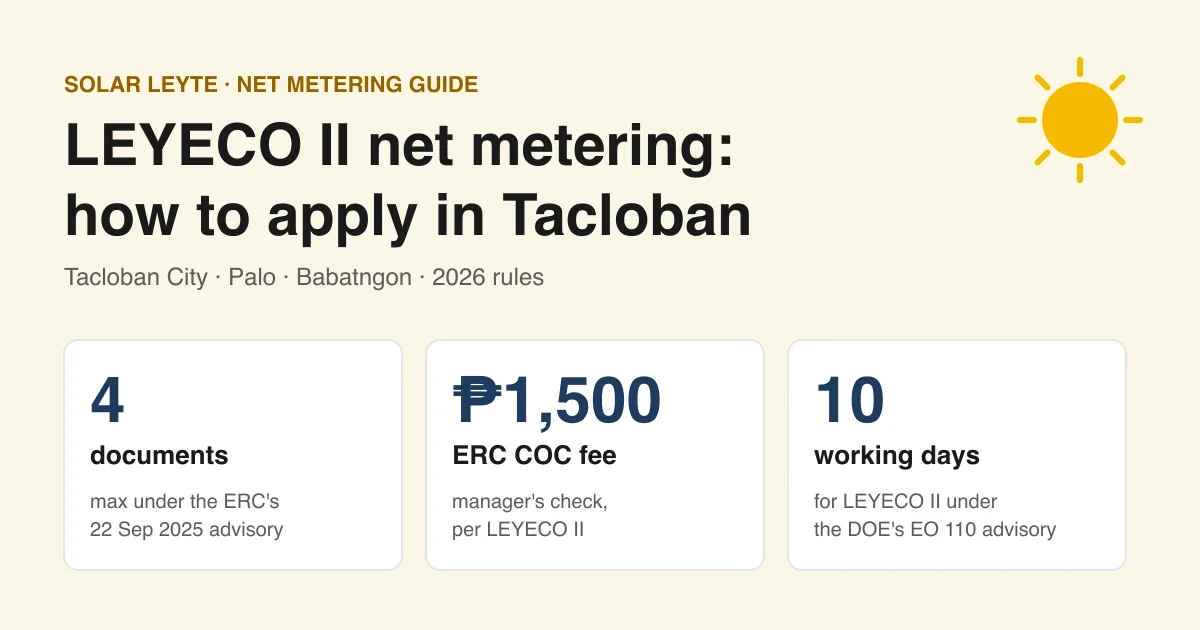
Net metering lets a home or business with solar panels send its surplus electricity to the grid and get credit for it on the bill. In the Philippines it was introduced by the Renewable Energy Act of 2008 (Republic Act No. 9513), and the Energy Regulatory Commission (ERC) sets the detailed rules.
Want the law itself in plain words? Our RA 9513 explainer sums up what the Renewable Energy Act gives homeowners, what it leaves to the ERC and DOE rules, and where its charges show up on a BILECO or LEYECO bill, with a Tagalog summary.
The rules have been revised over the years. Before you apply, confirm the current requirements with your cooperative. Our step-by-step articles for specific cooperatives show the date each one was last checked.
How it works
During the day your panels power your home first. When they produce more than you are using, the surplus flows out to the grid through a bidirectional meter, which records both the energy you import and the energy you export. Exported energy is credited against your bill each billing period.
Exports are typically credited at a lower value than the full rate you pay for imported electricity. Ask your cooperative how the credit is computed, because it changes the savings calculation.
Who it suits
Net metering is for grid-tie and hybrid systems. Off-grid systems are not connected to the grid, so it doesn’t apply to them. If you are still choosing a system type, read grid-tie vs hybrid vs off-grid first.
Running a business that uses 50 kW or more at its peak? Our Green Energy Option Program (GEOP) guide explains how you can buy renewable power directly from a supplier under the DOE's 2026 rules, and what that does and doesn't change on a BILECO or LEYECO bill.
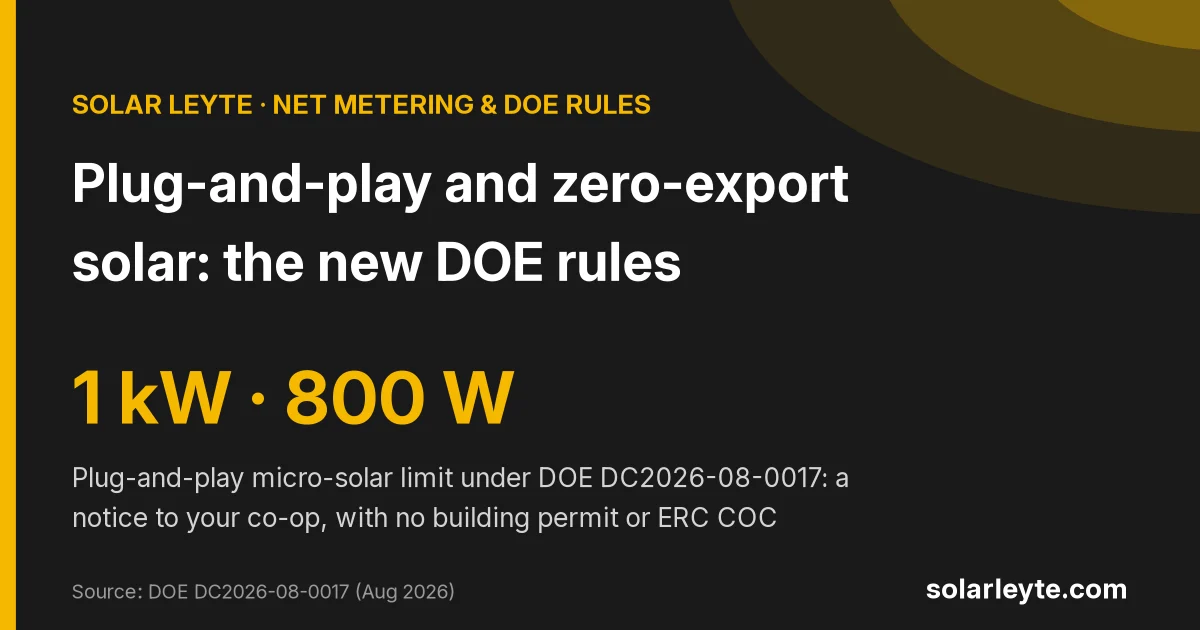
Living in a condo or renting? Our guide to solar for condos, apartments and renters explains the small plug-in kits the DOE now allows without net metering, and what your condo corporation or landlord can say.
The process, in outline
The order of the steps and the paperwork vary by cooperative, but the process usually looks like this:
- An installer designs your system and prepares the technical documents.
- You submit a net-metering application to your electric cooperative, with the required forms and plans.
- The cooperative reviews the application and may inspect the site.
- A bidirectional meter is installed and you sign a net-metering agreement.
- Export credits start appearing on your bill.
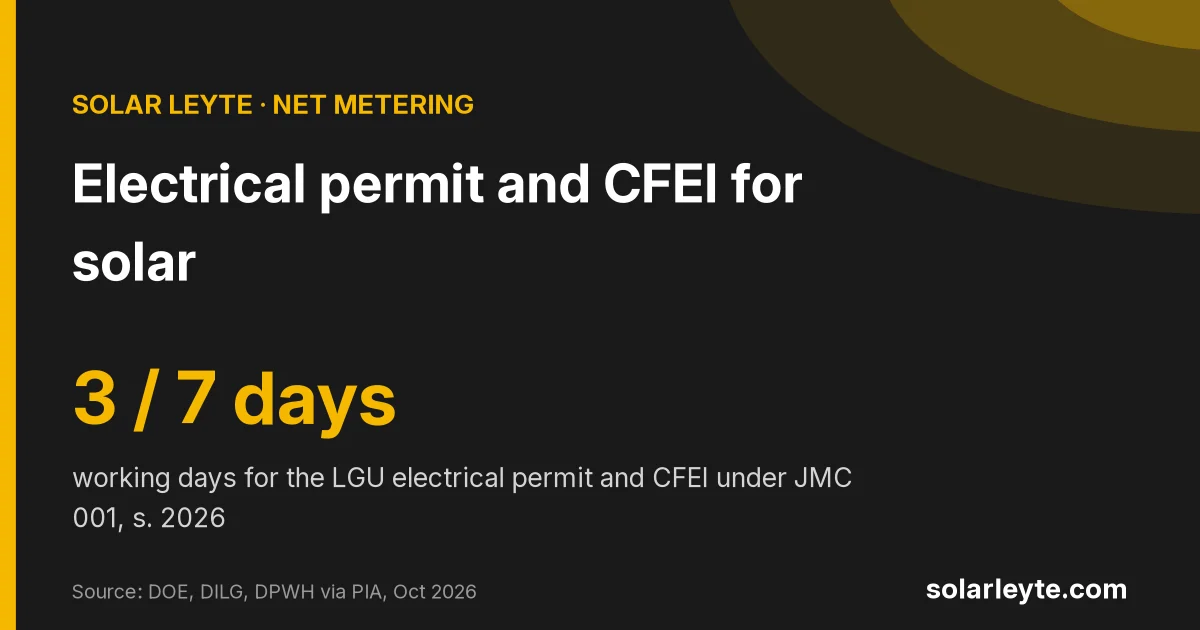
Before the co-op can process your application you'll also need an electrical permit and a CFEI from your town hall; our electrical permit and CFEI guide covers the steps, fees and the 3/7-day rule for Biliran and Leyte.
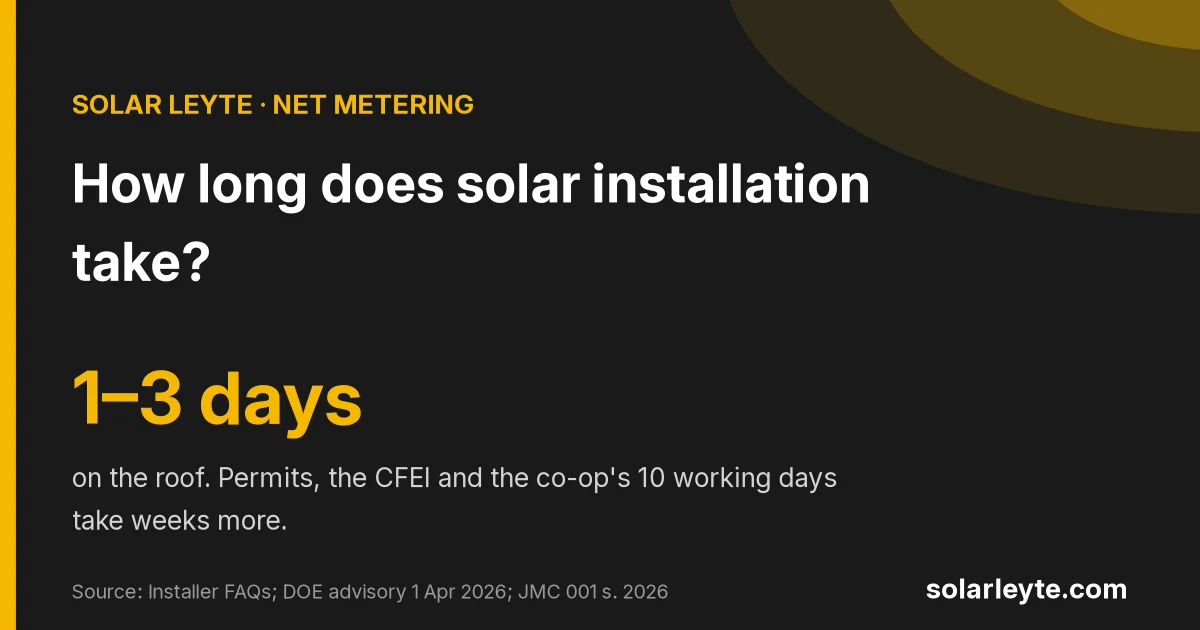
Wondering how long all of this takes? Our guide to how long solar installation takes puts each step's official deadline on one worked calendar.
Practical tips
- Ask your cooperative for its current checklist before you start.
- Keep copies of everything you submit, with dates.
- Size your system mainly for your own daytime use. Solar you use yourself saves you the full rate; exports are usually credited at less.
- Ask your installer whether the net-metering application is included in the quote.
Help with your application
MACC handles the net-metering paperwork for systems it installs in Biliran and Leyte. Request a quote and mention net metering.